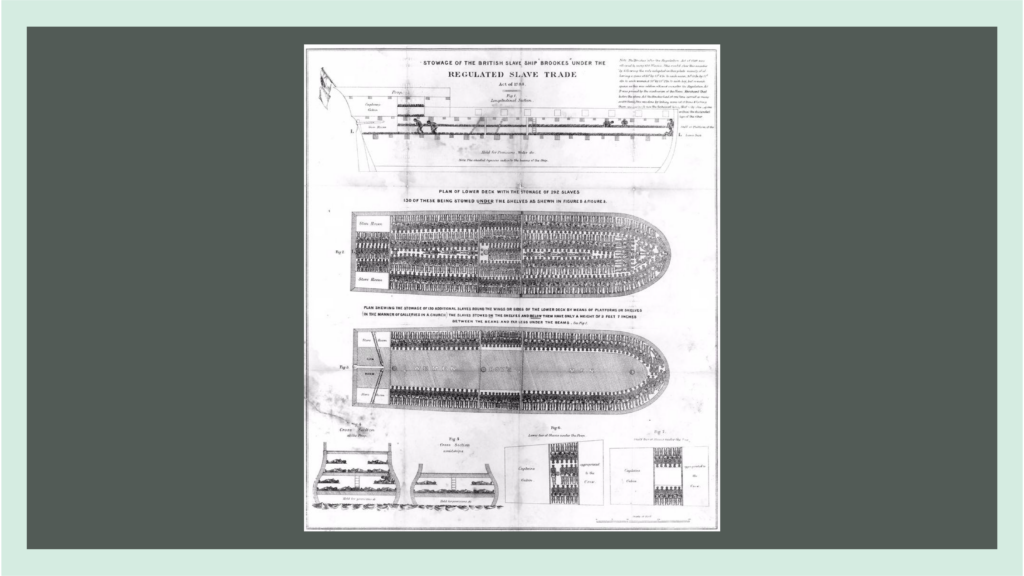
This learning module explores how visual media—especially charts and diagrams—can shape public understanding, emotion, and political action. Focusing on the iconic 1788 diagram of the Brookes slave ship diagram, students will examine how a single image helped transform abstract knowledge about slavery into a powerful, widely shared critique of its brutality.
Through close analysis, students will consider why this visual was so effective: its use of scale, repetition, and spatial compression; its appeal to both logic and emotion; and its ability to circulate in pamphlets, posters, and newspapers. The module also asks students to think critically about the ethics of such representations—how they expose violence while also risking the reduction of human lives to data points.
Reading
“Eighteenth-century abolitionists used every propaganda tool in the book, but one of their most widely circulated visual aids was an innovative diagram of the Liverpool slave ship Brookes, first published in 1788, writes Anne-Marie Conway in Eye 82.” (Eye Magazine)
Conway, Anne-Marie. “Charts change minds.” Eye Magazine: Blog (2012).
In-Class Discussion
Engaging the senses to better understand history.
Slide 1: Give students a minute to sit with the text.
Slide 2: Give students a minute to sit with the image.
With the image still on display, give students a couple of minutes to reflect on their reaction to reading text and then seeing the image.
Students Prompts
- What are some differences or changes that happened when you were confronted with the image?
- How does your modern lens affect your response?
- Can we imagine what it would have been like to have seen this image and understand the implications for the first time? Why or why not?
- What does it mean to be “unable” to image something? Where is that limit?
Tips for Student Engagement
When sharing an image, have students sit in silence for a minute. Ask them to focus on the image and notice their reactions.
Allow a few minutes for students to make notes for themselves about their experience with the image.
Encourage students to share their process out loud: images are meant to elicit a response.
After discussing a tough topic, give students a break.