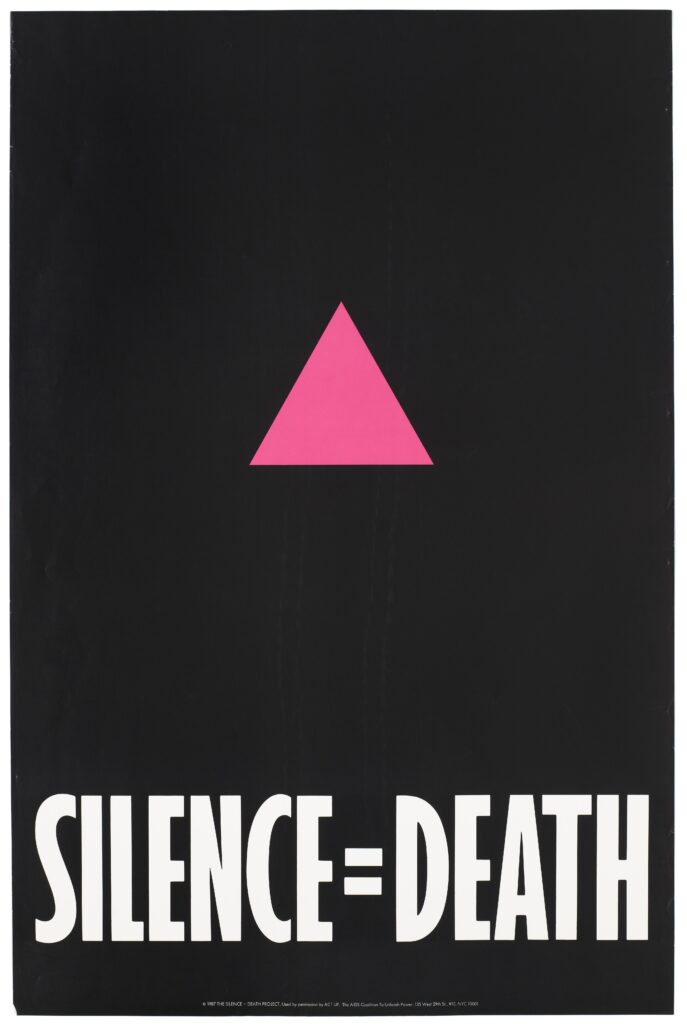
ACT UP (AIDS Coalition to Unleash Power) was founded in 1987 to fight the AIDS crisis and demand faster medical research, affordable treatment, and government action. The movement used highly visible protests, demonstrations, and civil disobedience to challenge government agencies, pharmaceutical companies, and public institutions.
Below are a curation of resources for your syllabus.
Reading
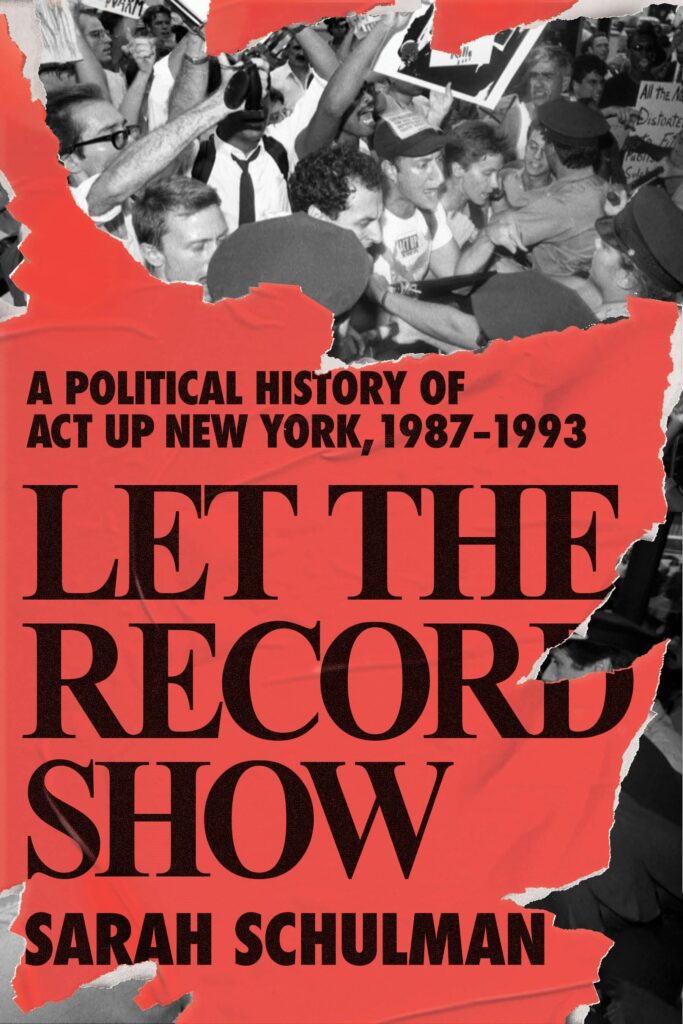
“In just six years, ACT UP, New York, a broad and unlikely coalition of activists from all races, genders, sexualities, and backgrounds, changed the world. Armed with rancor, desperation, intelligence, and creativity, it took on the AIDS crisis with an indefatigable, ingenious, and multifaceted attack on the corporations, institutions, governments, and individuals who stood in the way of AIDS treatment for all. They stormed the FDA and NIH in Washington, DC, and started needle exchange programs in New York; they took over Grand Central Terminal and fought to change the legal definition of AIDS to include women; they transformed the American insurance industry, weaponized art and advertising to push their agenda, and battled—and beat—The New York Times, the Catholic Church, and the pharmaceutical industry. Their activism, in its complex and intersectional power, transformed the lives of people with AIDS and the bigoted society that had abandoned them. Based on more than two hundred interviews with ACT UP members and rich with lessons for today’s activists, Let the Record Show is a revelatory exploration—and long-overdue reassessment—of the coalition’s inner workings, conflicts, achievements, and ultimate fracture. Schulman, one of the most revered queer writers and thinkers of her generation, explores the how and the why, examining, with her characteristic rigor and bite, how a group of desperate outcasts changed America forever, and in the process created a livable future for generations of people across the world.”
Schulman, Sarah. Let the record show: A political history of ACT UP New York, 1987-1993. Farrar, Straus and Giroux, 2021.
Documentaries
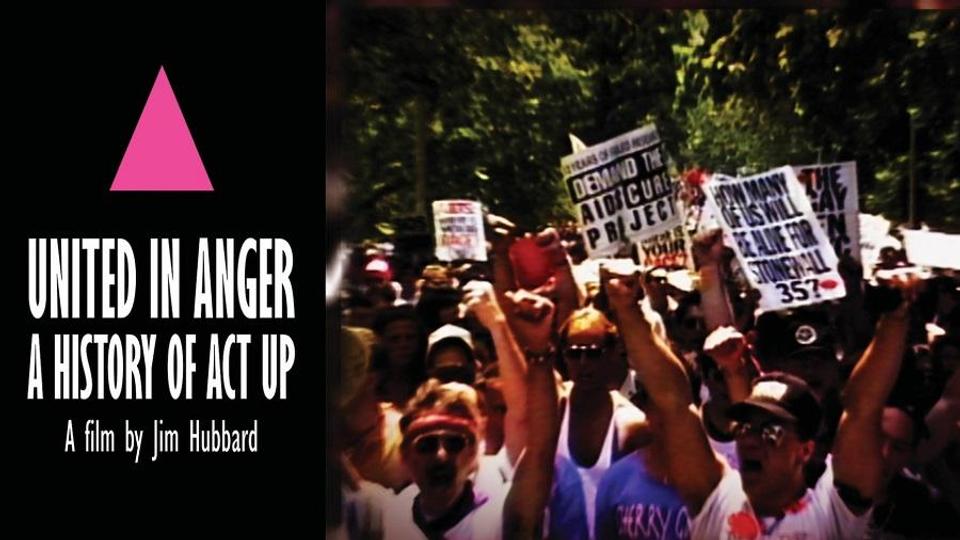
United in Anger: A History of ACT UP (2012)
Duration: 1 hour 30 minutes
“An inspiring documentary about the birth and life of the AIDS activist movement from the perspective of the people in the trenches fighting the epidemic. Utilizing oral histories of members of ACT UP, as well as rare archival footage, the film depicts the efforts of ACT UP as it battles corporate greed, social indifference, and government neglect.”
Opening statement with Director John Hubbard (2012).
Surviving Voices: The Black Community and AIDS by the National AIDS Memorial (2022).
Podcasts
“How can we write the history of AIDS activism so that all stories are equally important? In this episode of the History Workshop podcast, Sarah Schulman discusses how she navigated that challenge in her new book Let The Record Show: a Political History of ACT-UP New York.”
History Workshop. “Writing the History of AIDS Activism: Sarah Schulman on ACT UP New York.” History Workshop Podcast. Podcast audio, June 23, 2021. https://www.historyworkshop.org.uk/podcast/writing-the-history-of-aids-activism-sarah-schulman-on-act-up-new-york/.
“Schulman’s latest book, “Let the Record Show,” is a history of ACT UP New York, the direct-action group that reshaped AIDS activism in the late ’80s and early ’90s. It’s a book about necessary conflicts: between the AIDS community and the U.S. government and between queer people and a widely homophobic society. But it’s also about conflict among people who generally agree with one another and are working toward a common goal. Schulman calls the book “a political history,” but it’s also a work of political theory: a proposal for how social movements can become more effective by embracing dissensus rather than striving for consensus.”
Klein, Ezra, host. “Sarah Schulman’s Radical Approach to Conflict, Communication and Change.” The Ezra Klein Show. The New York Times, June 22, 2021. Podcast audio, 1:01:00. https://www.nytimes.com/2021/06/22/opinion/ezra-klein-podcast-sarah-schulman.html.
“A History of Stonewall, the Riot that Started the LGBTQ Revolution: In the early hours of June 28, 1969, a riot broke out at a rundown gay bar in New York City. Today the Stonewall uprising is famous around the world as a clash that helped spark a gay political revolution. Brian and Nathan talk to scholars and participants and discover how Stonewall led to a wave of activism, protest and political agitation.”
Balogh, Brian, and Nathan Connolly, hosts. “A History of Stonewall, the Riot That Started the LGBTQ Revolution.” BackStory. June 28, 2019. Podcast, audio. https://backstoryradio.org/shows/a-history-of-stonewall-the-riot-that-started-the-lgbtq-revolution/.
Accompanying Teaching Resource
A History of Stonewall, the Riot That Started the LGBTQ Revolution.
BackStory. Classroom Connections: A History of Stonewall, The Riot That Started the LGBTQ Revolution. Lesson set for BackStory episode #0284. Virginia Humanities, May 2020. PDF. https://backstoryradio.org/wp-content/uploads/sites/12/2020/05/A-History-of-Stonewall-The-Riot-That-Started-the-LGBTQ-Revolution-Lesson-Set.pdf.
Online Collections
Franky Abbott. ACT UP and the AIDS Crisis. 2016. Retrieved from the Digital Public Library of America (Accessed September 25, 2026.)
Schulman, Sarah, and Jim Hubbard. “Interviews (In Numerical Order).” ACT UP Oral History Project. Accessed September 25, 2026. https://www.actuporalhistory.org/numerical-interviews.
Green, Lucy Santos. “Stonewall and Its Impact on the Gay Liberation Movement.” Digital Public Library of America. 2017. https://dp.la/primary-source-sets/stonewall-and-its-impact-on-the-gay-liberation-movement.
Gran Fury collection. Manuscripts and Archives Division, The New York Public Library Digital Collections. Accessed September 25, 2026. https://digitalcollections.nypl.org/collections/67872730-8181-0137-9667-5d592a705567.
Columbia University. “Library.” GHAP Archive. Accessed September 25, 2026. https://ghaparchive.health.columbia.edu/content/library.
In-Class Discussions
Strategy v. tactic

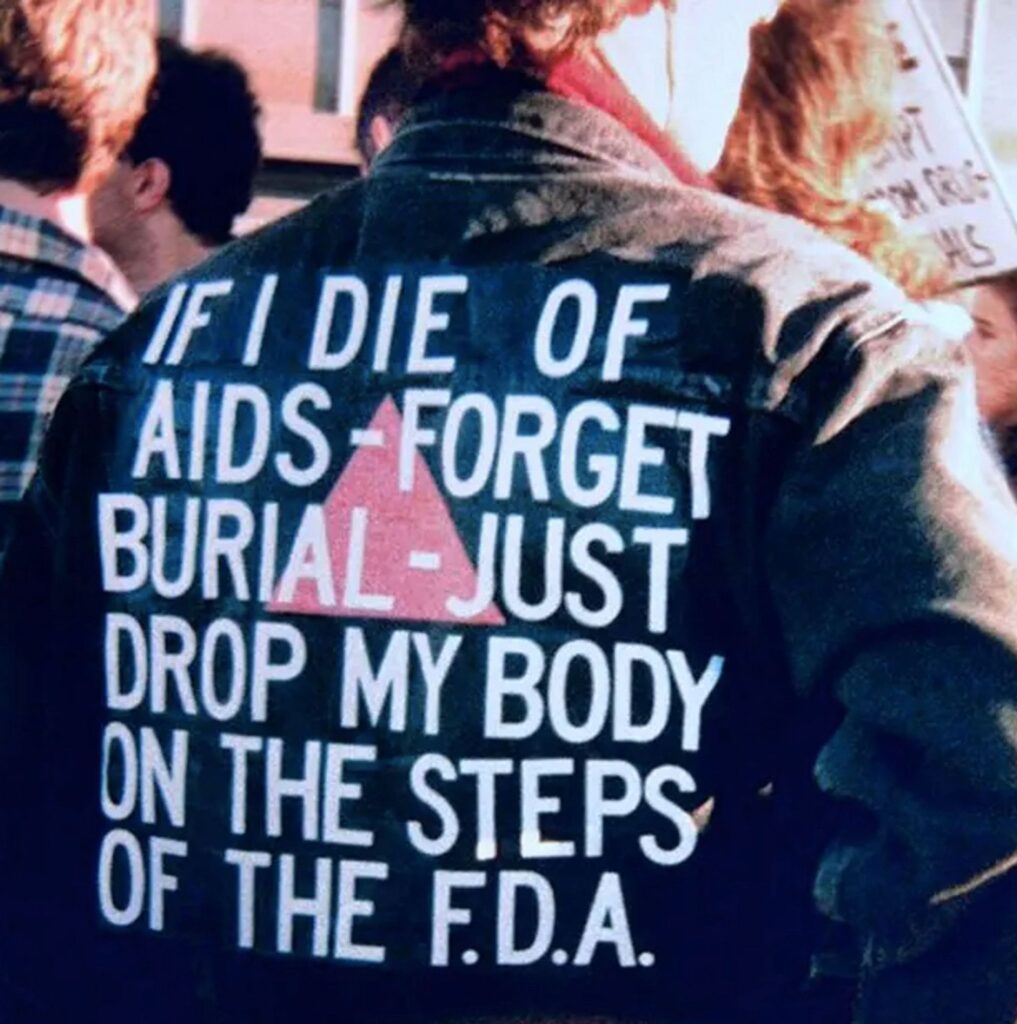
- Strategy versus Tactic
- Learning Objective: Analyze the decision making of social movements.
- Instructor Objective: Teach the difference between strategy and tactic.
- Instructions: Select a movement and a tactic. Assign a reading or media piece. Have students fill out a graphic organizer to analyze the tactic.
- Message: What do you think the message was that the activists wanted to communicate through this tactic?
- Tone: How would you describe the tone of this message?
- Audience: Who was the intended audience for this tactic? (Can be multiple: allies, potential allies, people in power.) How does this tactic reach the intended audience?
- Goal: What is the goal of this movement?
- Strategy: How does this tactic relate to the goal? How does it help the movement reach the goal?
- Reflection Questions:
- What is the relationship between a tactic and a strategy?
- In-Class Discussion:
- Have students share their answers in groups of two.
- Guiding Questions:
- Was your idea of the strategy similar or different?
- What was the strategy of the movement?
- Can we extrapolate on one singular event?
- Guiding Questions:
- Have students share their answers in groups of two.
Timeline Curating
Learning Objective: Connect isolated moments to a larger ecosystem.
Teaching Objective: Critically engaging curation of information.
Instructions
- Decide if you want to use a digital platform (Padlet, Miro, Mural) or do an in-person workshop with print materials, sticky notes, or a whiteboard.
- Have students collect timelines from different organizations.
- Once collected, split students into groups based on how many timelines there are. Have students see how each particular organization curates the important events.
In-Class Discussion
- How much overlap do these different timelines have?
- Can you see the focus through their curation?
Emotional Literacy
Learning Objective: Learn how to articulate your reaction to content; Understand the role of consciousness raising in social movements.
Instructor Objective: Prepare students for challenging content; Teach a shared language for discussion.
Instructions
- Select a piece of media for students to watch (for example, the Emmitt Till documentary, or the ACT UP documentary).
- Fill out this google form. Submit at least two times.
- The Google form asks students to name their reactions to the content and write a short response.
- Show the aggregated results of the google form.
Discussion Questions
- Is there a dominant reaction? What is it? Someone who responded with this word, please share more with us.
- Is there a mixed reaction? What does this mean for understanding historical events?
- Are there two main reactions? Can someone who responded with these two please share their reflection?
- Did you see your emotions reflected back to you by the people in the documentary?
- How can we use our own contemporary reactions to better understand historical events?